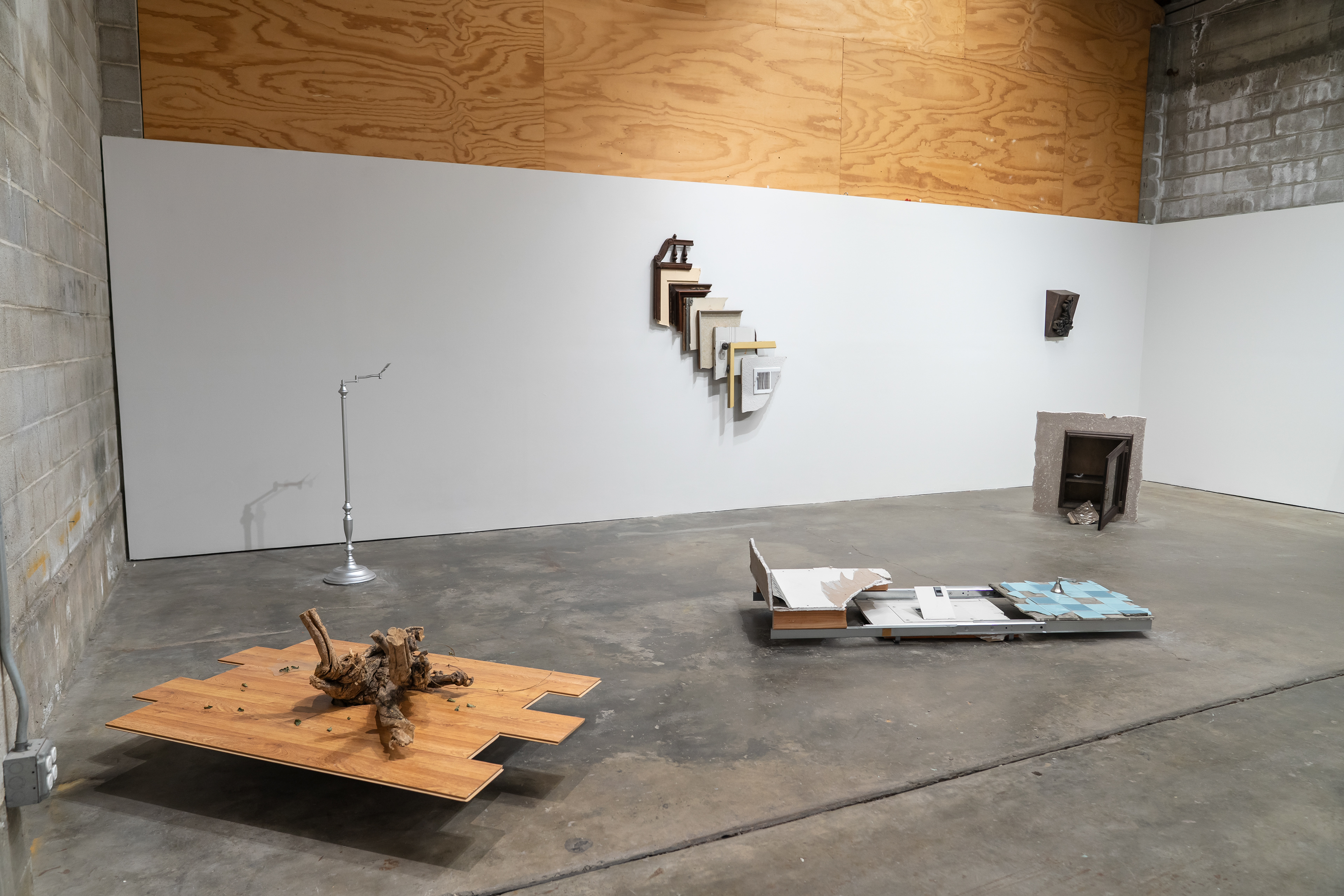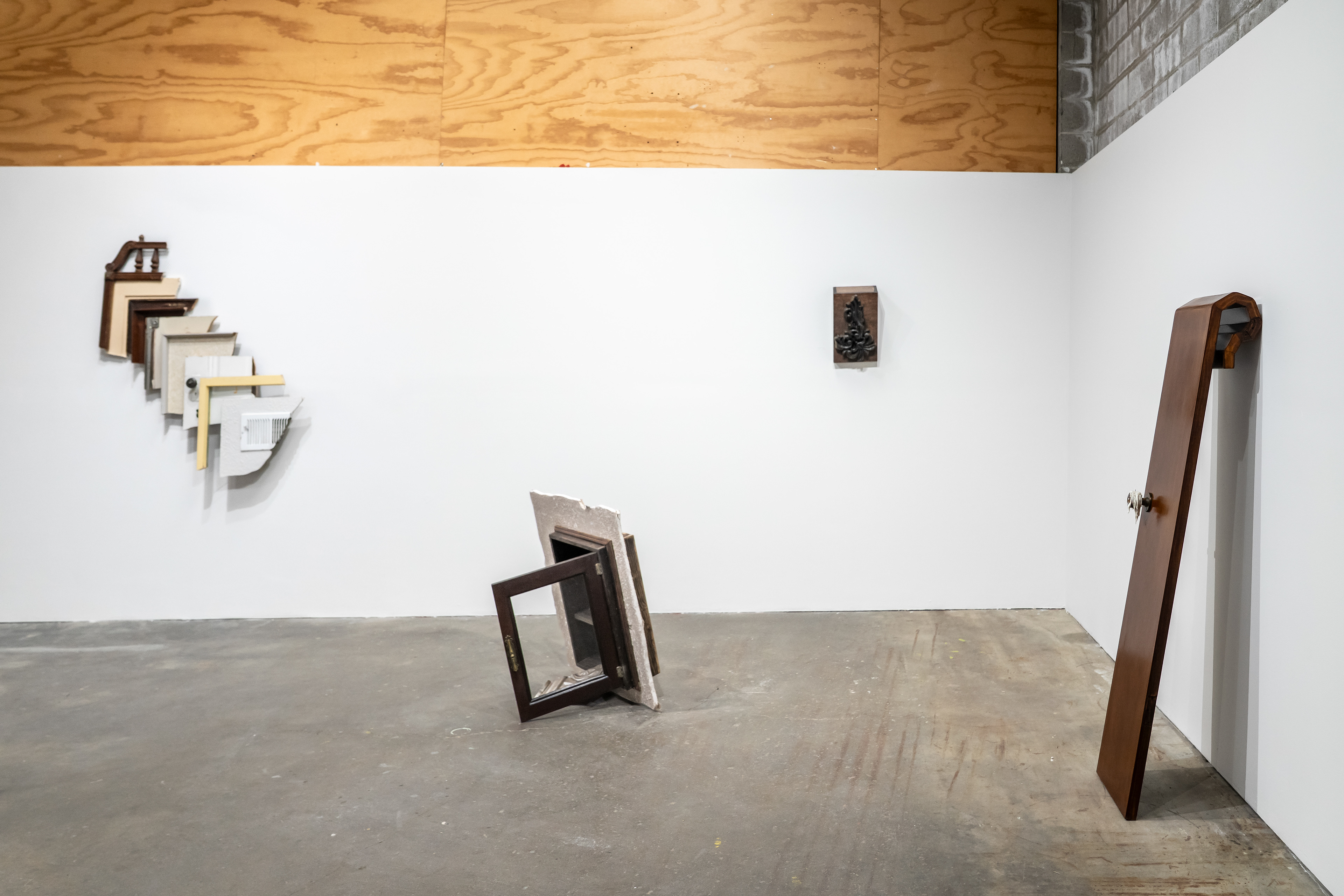
Helia Pouyanfar’s Addendum uses fragments of everyday domestic architecture and discarded construction debris as sculptural meditations on the complexities of the refugee experience. Her works embrace the poetic tension in using residential building materials, as a physical home is one of the belongings that cannot be uprooted to carry across borders. Through the embrace of these found objects, her artistic process becomes a means of understanding dislocation and survival.For refugees, the loss of home is irresolvable. Pouyanfar asks us to consider what might be generated in a new context and the process of becoming untethered from one’s homeland. Her work suggests something that isn’t necessarily liberatory, but what she describes as having a “perverse freedom” in its disorientation. The materials show wear and the wounds of demolition, but she brings them together with tenderness and craft. A truncated section of tree bursts from the perfectly sized gap in a section of wood floor planks. Sections of drywall are peeled and jagged, but carefully oriented. A neatly arranged spread of broken cabinetry, window frames, doors, and vents create a echoed refrain of corners.
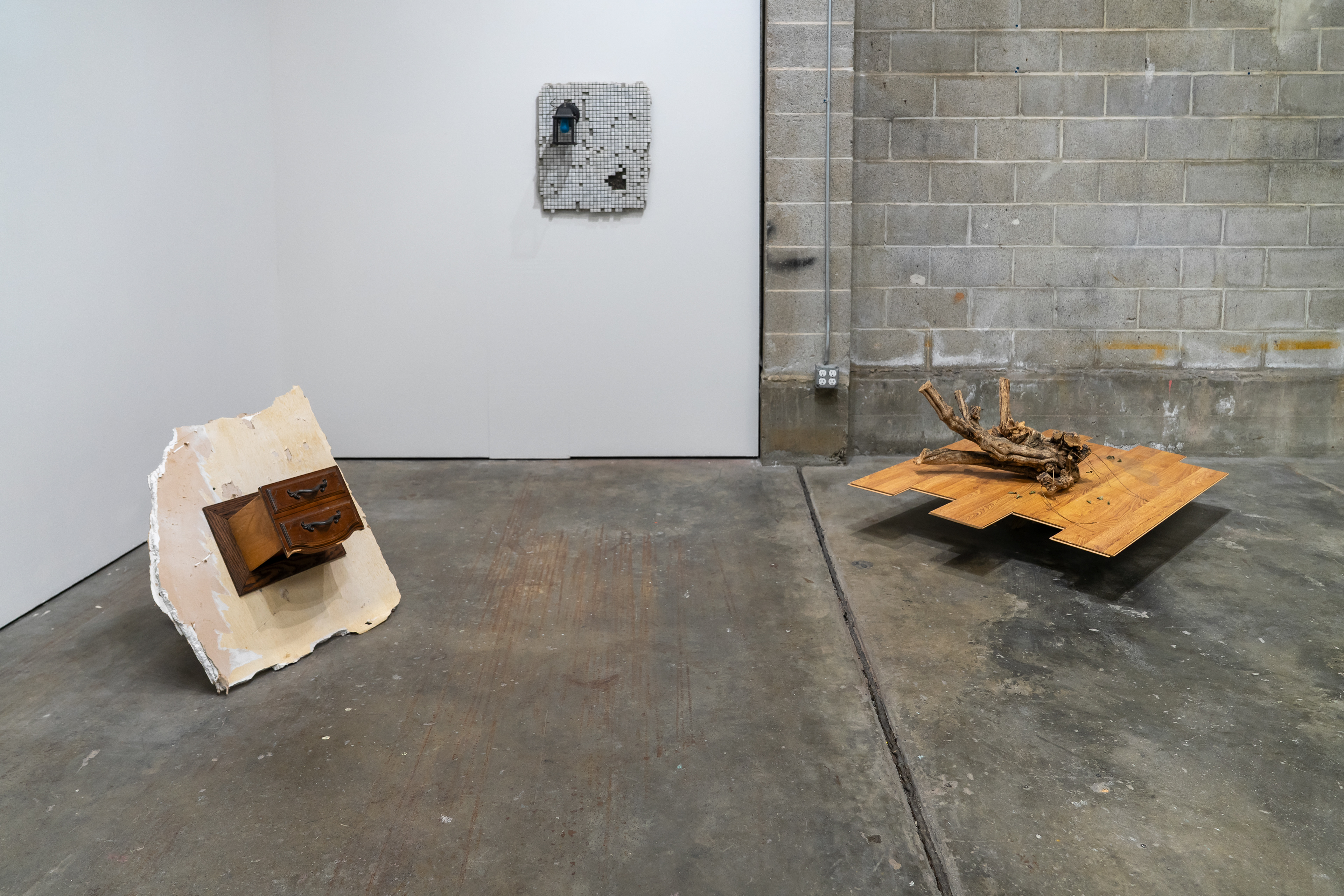
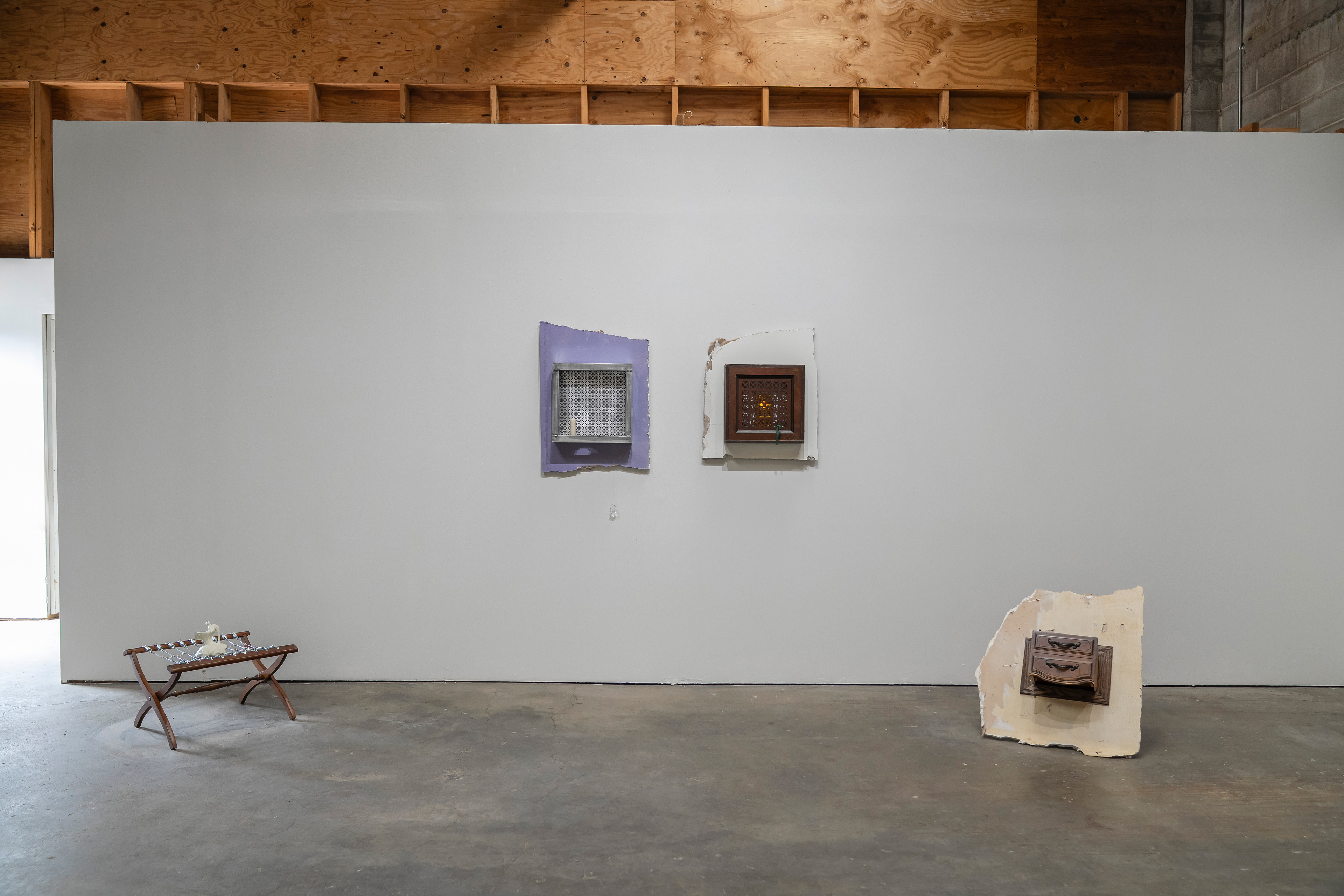
To take in Pouyanfar’s pieces, we need to physically reorient how we view what might otherwise be easily overlooked building surfaces. Moulding we might normally see at the edge of the ceiling above us is now on the floor; interior infrastructures have been opened up to be peered at from beneath and behind. These subtle shifts in viewership ask for consideration of the human body in relation to these materials: our own, implied past occupants of these buildings, workers who handled them, and the embodied refugee experience. Pouyanfar reemphasizes this in her recurring use of handles and knobs that imply the touch of a hand and compartments that suggest an interiority, both physical and emotive. Intimate details–a photograph veiled behind a translucent fabric, items hidden in a drawer, a partially melted candle–suggest elusive stories that dart away before we can fully hold them. They gesture to narratives not for us to resolve, but a sustained tension of life and longing we are invited to connect with.
Helia Pouyanfar is an interdisciplinary artist whose work investigates the permanently transient state of the refugee body and its negotiation and reconciliation with place. Pouyanfar received her B.A. in Art Practice from the University of California, Berkeley and her MFA in Studio Art from the University of California, Davis. She has been the recipient of a Berkeley Civic Arts Individual Artist Grant, and a Kala Art Institute Fellowship. Her work has been exhibited at the Manetti Shrem Museum of Art, de Young Museum, Skirball Cultural Center, Miami University, Foyer-LA, Root Division, Southern Exposure, Berkeley Art Center, Richmond Art Center, and SF Camerawork.